


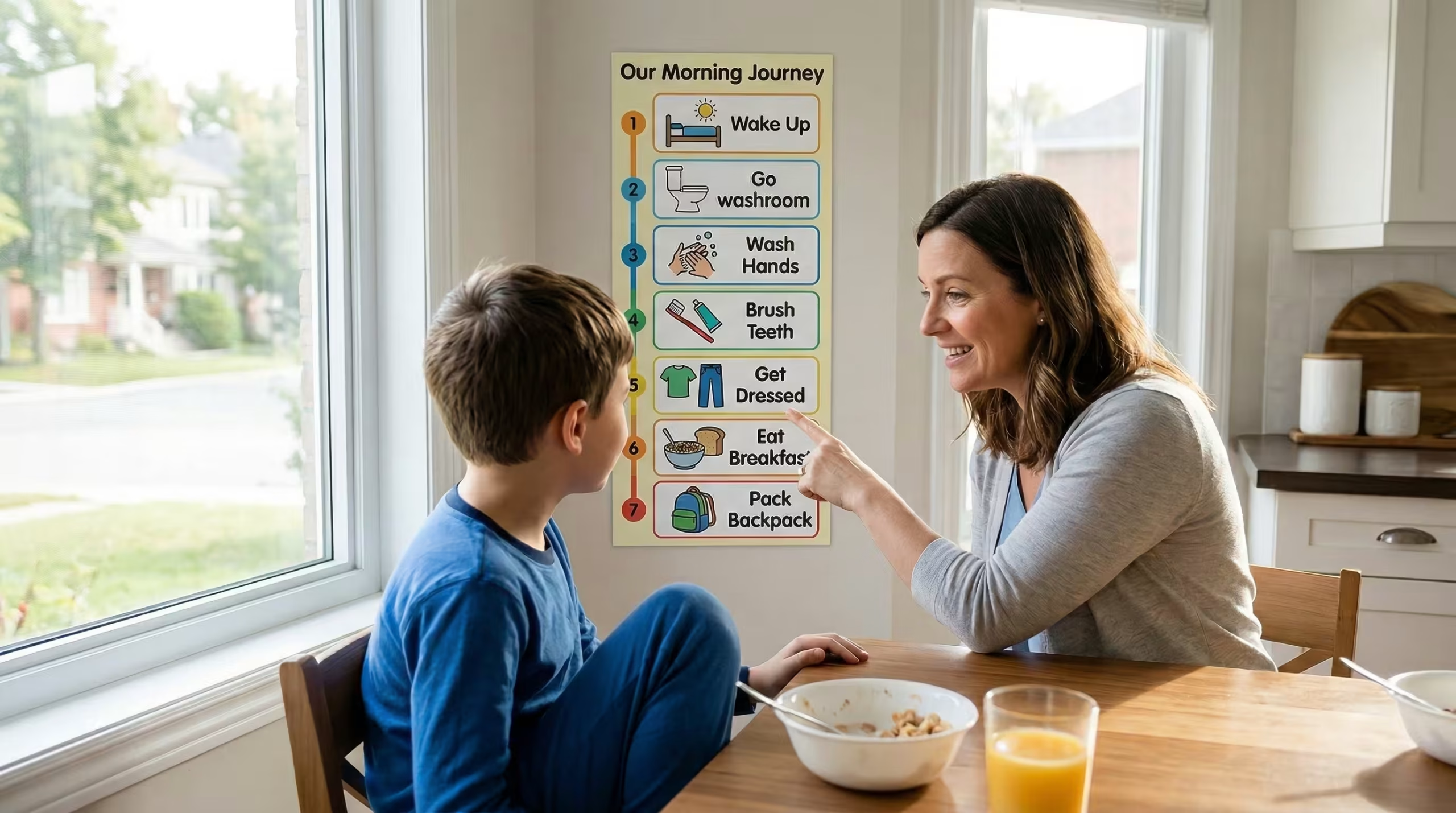

Parents in Ottawa can create effective autism routines Ottawa families trust by building predictable daily schedules tailored to their child’s sensory and developmental needs. Consistent morning, school, and bedtime routines reduce anxiety, support independence, and improve overall well-being. Combining visual schedules, gradual transitions, and guidance from Autism Services Ottawa gives your child a structured, calming environment where they can truly thrive.
Why Consistent Routines Matter for Children with Autism
For children on the spectrum, unpredictability is one of the greatest sources of anxiety. Structured routines for children with autism provide the safety of knowing what comes next. Research supported by the Public Health Agency of Canada highlights that predictable environments reduce behavioural challenges and help autistic children develop self-regulation skills. In Ottawa, where families often navigate multiple therapies and school programs, a well-designed autism-friendly home schedule becomes the glue that holds each day together.
Designing Your Child’s Daily Autism Routines Ottawa
Every child is unique, so the best autism routines Ottawa are those tailored to your child’s preferences, triggers, and strengths. Start by observing which parts of the day feel most stressful mornings before school or the transition between therapy and homework are common pressure points. Build the schedule around those moments first.
Morning Routine Tips
A calm morning sets a positive tone for the entire day. Keep the sequence identical each day: wake-up, personal hygiene, breakfast, dress, and school-bag check. Use a visual checklist so your child can track their progress independently, reducing nagging and boosting confidence.
After-School and Homework Routine
Children with autism often arrive home overstimulated. Allow a 15 to 20 minute “decompression window” with a preferred quiet activity before transitioning to homework or therapy tasks. This buffer dramatically reduces meltdowns and supports sustained focus.
Bedtime Routine
A consistent bedtime routine signals the brain that sleep is approaching. Dim lights 30 minutes before bed, limit screens, and include calming activities such as a warm bath, light reading, or deep-pressure brushing. Keeping the routine under 45 minutes maintains its effectiveness.
Sample Daily Schedule for Autistic Children Ottawa
| Time of Day | Routine Activity | Purpose | Tips for Success |
| 7:00 to 7:45 AM | Wake-up, hygiene, breakfast | Start day calmly | Use visual checklist |
| 3:30 to 3:50 PM | Decompression (quiet play) | Reduce overstimulation | Offer preferred sensory toy |
| 4:00 to 5:00 PM | Homework / therapy task | Build focus | Break into 15-min chunks |
| 5:30 to 6:30 PM | Family dinner and downtime | Social bonding | Keep mealtimes consistent |
| 7:30 to 8:15 PM | Bedtime routine | Signal sleep readiness | Dim lights, limit screens |
Tools That Support Autism-Friendly Home Schedules
Visual schedules for autistic kids are among the most evidence-based tools available. Printed picture boards, dry-erase boards, or apps like Choiceworks make abstract time concrete for children who think visually. Timers, both visual sand timers and digital countdown clocks, help children understand how long an activity lasts, making transitions far smoother. Positive reinforcement tokens tied to routine completion further build motivation and independence.
Connect with Autism Services Ottawa to get professional guidance on choosing the right tools for your child’s specific profile.
Strategies for Handling Routine Disruptions
Even the best autism-friendly home schedule faces disruptions like holidays, sick days, or unexpected events. Prepare your child in advance by using a “change card” in their visual schedule. Practice small, intentional changes during low-stress moments so they build flexibility skills gradually. Reducing stress with predictable schedules does not mean rigidity; it means giving your child enough consistency that occasional changes feel manageable rather than catastrophic.
Supporting Independence Through Routines
Structured daily routines for autistic children Ottawa are not just about managing behaviour; they are powerful tools for building life skills. When children learn to follow a morning routine independently, they gain confidence. Over time, they can take ownership of more complex sequences, like packing their school bag or preparing a simple snack. Supporting independence through routines is one of the most lasting investments you can make in your child’s future.
Frequently Asked Questions About Autism Routines Ottawa
How long should each routine activity last?
Keeping individual steps short 5 to 15 minutes works well for most children. Longer blocks can be broken into smaller segments with built-in movement or sensory breaks to maintain engagement within your autism-friendly home schedule.
Can autism routines be flexible for special occasions?
Yes. Once a routine is well-established, you can introduce planned flexibility. Show your child the change in advance using a visual “special day” card so they feel prepared rather than surprised.
How do visual schedules help children with autism?
Visual schedules convert abstract time into concrete images, reducing cognitive load. Children who struggle with verbal instructions can follow picture-based steps independently, reinforcing their sense of control and reducing anxiety throughout daily routines for autistic children Ottawa.
How do I start a new routine without resistance?
Introduce one step at a time rather than overhauling the entire day. Pair each new step with a preferred activity or reward. Gradual implementation is the most effective approach for structured routines for children with autism.
Are there professional services to support autism routines in Ottawa?
Absolutely. Autism Services Ottawa at MC Behavioural Services provides behaviour therapy and parent coaching that help families build sustainable, individualized home routines based on their child’s needs.
Final Thoughts
Building effective autism routines Ottawa families can sustain takes time, patience, and the right professional support. The benefits of consistent routines for autism include reduced anxiety, stronger independence, and a calmer household, making the effort well worth it. By pairing a structured autism-friendly home schedule with visual tools and expert guidance, you give your child the predictability they need to flourish. Remember, the goal is progress over perfection. Lean on your community, trust the process, and never hesitate to reach out to a qualified autism specialist when you need a helping hand.