


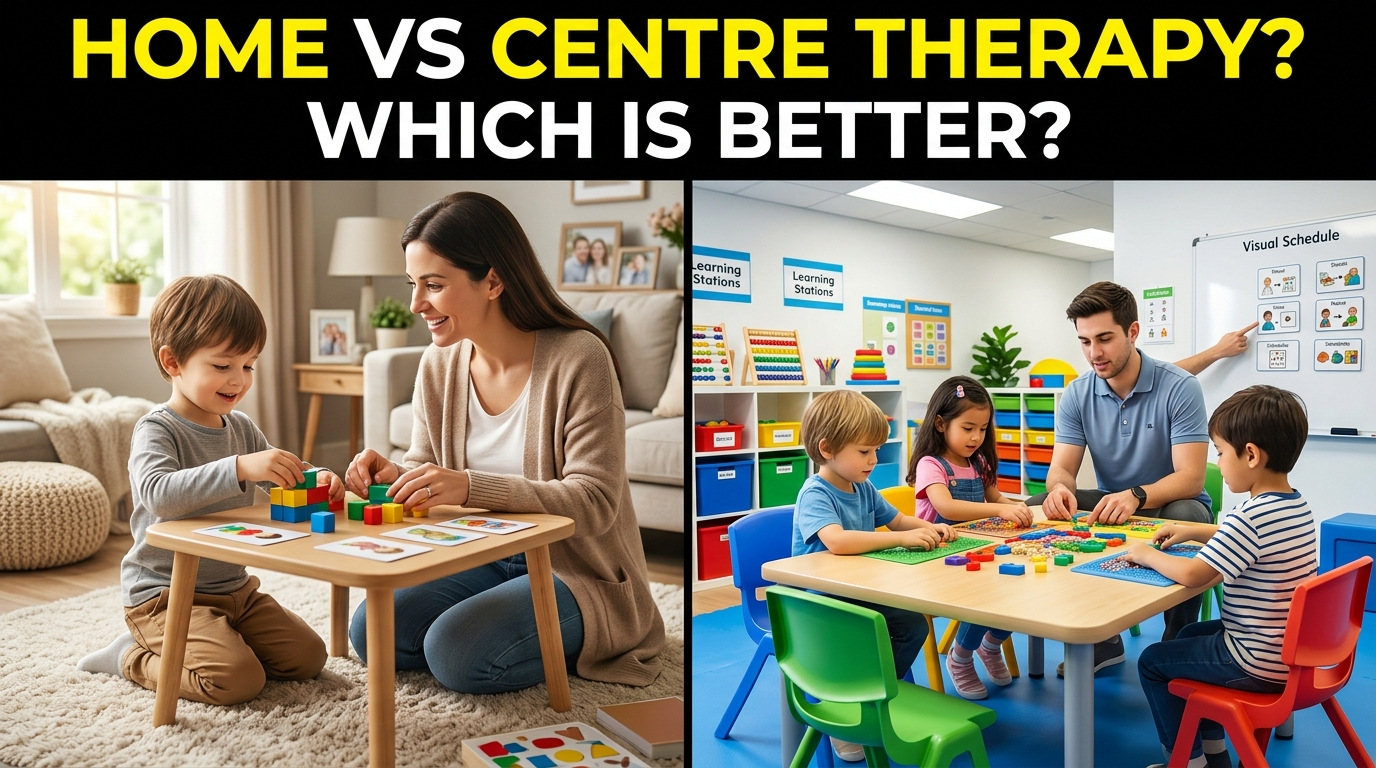

The difference between in-home vs centre-based autism therapy is primarily the setting: in-home therapy happens in your natural environment, whereas centre-based therapy occurs in a specialized clinic. For Ottawa parents, the better option depends on your child’s specific sensory needs, behavioural goals, and your family’s daily schedule, as both provide high-quality support. Choosing the right therapy setting is a pivotal step in ensuring your child receives the most effective intervention possible. By understanding the unique strengths of each environment, you can tailor your child’s learning experience to their specific developmental stage.
What in-home vs centre-based autism therapy represents is a choice between naturalistic learning and highly structured clinical intervention. Home-based autism therapy vs clinic therapy is a common debate for families navigating a new diagnosis. Each path offers distinct autism therapy options for children that target skill acquisition and behaviour management in different ways. While one child might thrive in the quiet comfort of their living room, another may require the social stimulation found only in a professional centre. Ultimately, the goal remains the same: fostering independence and improving the quality of life for the entire family.
Exploring In-Home Autism Therapy
In-home therapy involves a qualified professional coming directly to your residence to deliver services. This approach leverages the familiar environment, allowing the child to learn and practice essential skills exactly where they will use them daily.
Benefits of the Familiar Home Environment
One of the primary benefits of in-home ABA therapy is the reduction of transition stress; there is no need to pack a bag or navigate Ottawa traffic. This setting is ideal for working on self-care routines, such as dressing, eating, or toilet training, in a space that feels safe and predictable. For many children with significant sensory sensitivities, the controlled and familiar atmosphere of their own home provides the best foundation for focused learning without the distraction of external clinical stimuli.
Naturalistic Teaching and Parent Coaching
Furthermore, home sessions allow therapists to observe real-life dynamics and provide immediate coaching to parents and siblings. This naturalistic teaching style ensures that skills generalized at home are more likely to stick. Because the therapist works with the items and routines already present in the home, the learning feels less like a clinical task and more like a part of daily life.
The Role of Centre-Based Autism Therapy
Centre-based therapy takes place in a dedicated clinic designed specifically for therapeutic success. These facilities offer centre-based autism therapy advantages such as access to a wide variety of specialized tools, sensory rooms, and peer interaction opportunities that are difficult to replicate at home.
Specialized Tools and Clinical Expertise
In a centre, your child is immersed in a structured environment where every corner is optimized for learning. This clinical setting often helps children distinguish between “play time” at home and “learning time” at the centre, which can improve focus and compliance. Another significant benefit of the clinic model is the presence of multiple therapists and specialists under one roof. This allows for collaborative care and professional oversight that is immediate and constant.
Social Development Through Peer Interaction
Children also benefit from being around peers, which is essential for developing social communication and group participation skills. For parents, the centre provides a dedicated space where they know their child is receiving intensive, focused attention, often allowing the parent to manage other responsibilities or observe sessions through one-way mirrors to learn techniques without distracting the child.
Comparing In-Home vs Centre-Based Autism Therapy
When comparing personalized vs structured therapy environments, it is important to look at several key factors. In-home settings excel at teaching functional life skills and reducing the “generalization gap,” which is the difficulty some children have applying skills learned in a clinic to their home life. Conversely, centre-based programs offer a level of social complexity that prepares children for school environments. In the clinic, children learn to navigate the presence of others, wait their turn, and follow group instructions in a way that is hard to simulate in a private home setting.
| Feature | In-Home Therapy | Centre-Based Therapy | Best For |
| Primary Environment | Familiar & natural | Structured & professional | Varies by child |
| Social Interaction | Family & siblings | Peers & multiple staff | Social skills |
| Skill Generalization | High (natural setting) | Moderate (requires effort) | Daily routines |
| Parent Involvement | High (directly involved) | Moderate (scheduled updates) | Coaching |
| Distractions | Low (controlled by family) | Managed (clinical control) | High focus |
Choosing the Right Setting for Your Child
The question of which therapy is better for autistic children does not have a universal answer. It depends on your child’s current developmental priorities.
Identifying the Best Fit for Your Family
If your child is struggling with basic hygiene or mealtime behaviours, in-home therapy is often the superior choice. However, if the primary goal is preparing for the transition to a classroom or improving social play with peers, the structured nature of a centre is usually more beneficial. Some families even choose a hybrid model, utilizing centre-based therapy for intensive learning and in-home sessions for family-based skill application.
Professional Guidance and Community Support
Professional autism services Ottawa providers like MC Behavioural Services recommend a thorough assessment before deciding. According to the Public Health Agency of Canada, approximately 1 in 50 children and youth are diagnosed with Autism Spectrum Disorder, and the Government of Canada emphasizes that early, individualized intervention is the key to positive outcomes. By consulting with a Board Certified Behaviour Analyst (BCBA), you can determine which environment will most effectively address your child’s unique strengths and challenges.
Frequently Asked Questions
What is the difference between in-home vs centre-based autism therapy?
In-home therapy takes place in the child’s natural environment, focusing on daily routines. Centre-based therapy occurs in a clinic with specialized equipment and peer groups.
Is in-home autism therapy effective?
Yes, it is highly effective for teaching functional life skills and ensuring that learned behaviours are maintained in the child’s real-world environment without the need for transition.
Are centre-based programs better for social skills?
Generally, yes. Centres provide a controlled environment where children can interact with peers under the supervision of multiple therapists, which is difficult to replicate at home.
Can children switch between therapy types?
Absolutely. As a child grows and their needs change, many families transition from home-based support to centre-based programs to prepare for school or community integration.
How do I choose the right autism therapy in Ottawa?
Start with a professional consultation and assessment. Look for providers that offer individualized plans and have a clear philosophy on parent involvement and data-driven progress.
Final Thoughts
Deciding between in-home vs centre-based autism therapy is a deeply personal choice that should be centered on your child’s unique path. Whether you prefer the comfort of your living room or the specialized resources of a professional clinic, the most important factor is the quality of the clinical team and the consistency of the intervention. By staying informed and actively involved, you ensure that your child has the tools they need to thrive. Reach out to a local specialist today to discuss which setting will best support your family’s journey toward growth and independence in Ottawa.